
Custom compostable mailers
Single vs Double Adhesive Mailers: A Returns-Ready Buying Checklist
Published 2026-11-22
Should your ecommerce mailer have a second adhesive strip? Compare single and double closures, test packed returns and brief a custom mailer order.
TL;DR
A single-adhesive mailer has one closure for the outbound shipment. A double-adhesive mailer has an additional strip that can be used to close the package again after it has been opened, provided the construction, size and opening method support it. For brands planning to use the same outer bag for returns, trial the complete two-way journey before approving a custom production specification.
Key takeaways
- A second adhesive strip helps only if the opened mailer can be repacked and securely resealed for returns.
- Test both the outbound and return journey using realistic packed samples before approving production.
- Zero Pack adhesive protective release strips are not compostable: remove both before composting a suitable confirmed mailer.
- Certification of the mailer material does not guarantee local collection acceptance.
Introduction
A second adhesive strip sounds like a small packaging detail. For a brand that asks customers to send returns in the original mailer, it can change how easily that journey works.
The right choice is not always double adhesive. A single-strip mailer may be entirely suitable when returns use another package, customers do not normally ship goods back in the original outer bag, or the product needs a different type of protection. The practical question is whether a second, unused closure solves a real step in your fulfilment and returns process.
Short answer
A single-adhesive mailer has one closure for the outbound shipment. A double-adhesive mailer has an additional strip that can be used to close the package again after it has been opened, provided the construction, size and opening method support it. For brands planning to use the same outer bag for returns, trial the complete two-way journey before approving a custom production specification.
What is the difference between single and double adhesive?
A single-strip mailer is sealed once for dispatch. The recipient opens the package and, if a return is required, may need another suitable package or a separate way to close the opened bag.
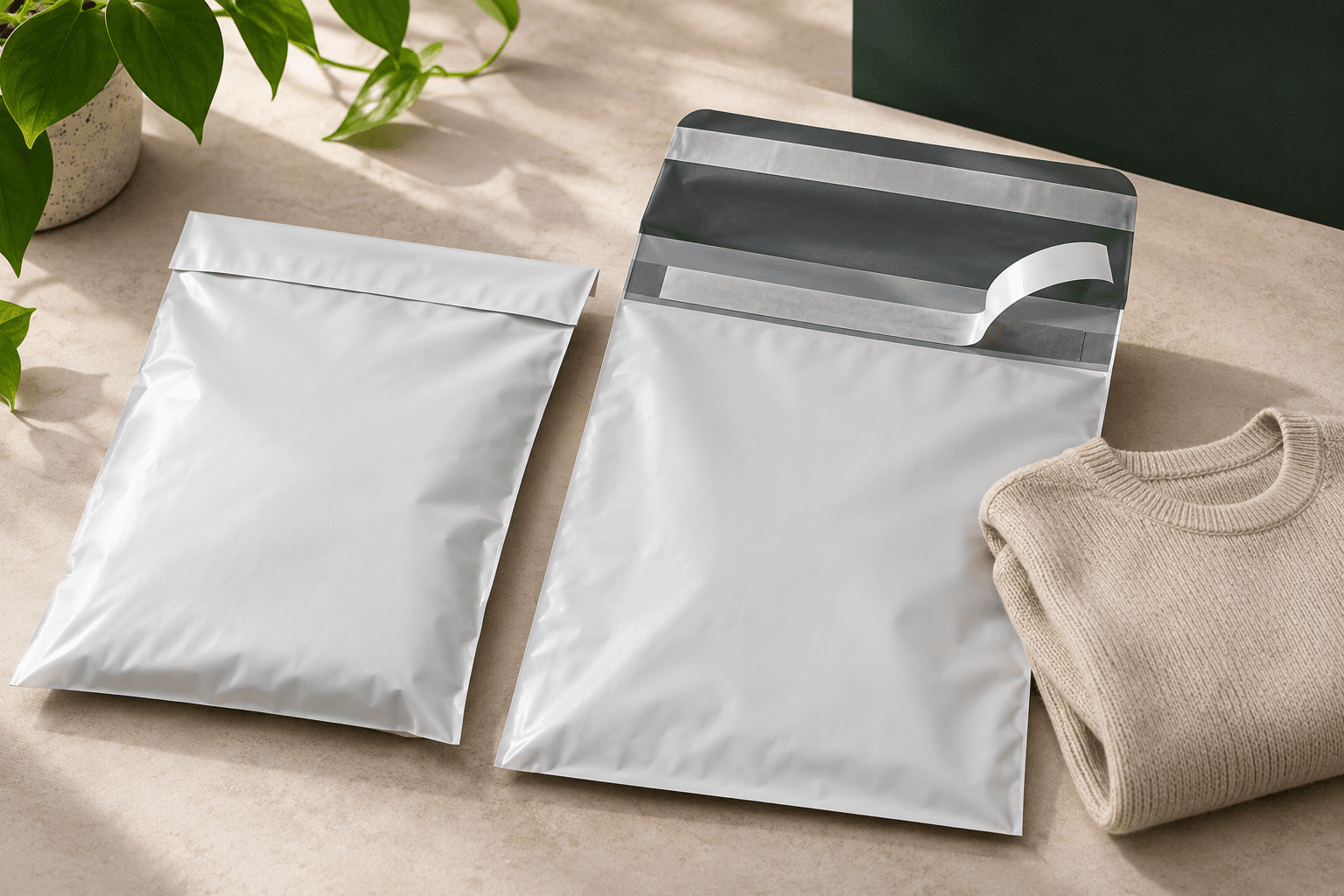
With a double-strip design, the first seal is used for the outbound shipment and a second adhesive closure is reserved for a return. The opening feature, tear location and remaining material need to leave enough usable bag for a return closure.
Double adhesive is a design feature, not a guarantee that every packed item can make two journeys in the same bag. A poorly placed tear strip, an overfilled bag or a return label covering critical information can defeat the point.
Important: remove the adhesive protective strips before composting
The peel-off protective release strips covering the adhesive on Zero Pack mailers are not compostable. With a double-adhesive mailer, the recipient may encounter an additional release strip when closing the package for a return. Both protective strips must be removed from the packaging and kept out of compost before the remaining mailer is composted under the conditions applicable to its confirmed specification. Do not assume that the protective strips are certified simply because the mailer material is compostable.
For brands using a double-adhesive mailer, this should be clearly explained to the end recipient in the packaging or customer disposal instructions. The first protective strip may already have been removed during fulfilment, but the recipient still needs to know to remove the second strip when using the return closure and to keep any loose protective liners out of compost. The customer should also check the correct composting route for the mailer itself; compostability certification does not guarantee acceptance by a local collection service.
When is a second strip worth considering?
Consider double adhesive when all of these statements are broadly true:
• Customers are instructed or encouraged to return eligible items in the original outer mailer.
• The product is suitable for flexible packaging in both directions.
• The opened bag retains enough space and strength for the product to be repacked and closed.
• A return label or courier instruction can be applied without interfering with the second closure.
• Your warehouse team and customer service process can clearly explain how the return-ready design works.
If most returns are handled using a box, a different prepaid bag, an in-store handoff or no repackaging at all, adding a second strip may not improve the actual customer process. First document what happens today, then decide what the mailer needs to support.
The seven-step returns-ready mailer test
Before placing a custom order, test a physical sample with an ordinary packed order and at least one awkward but realistic variation.
1. Pack the normal order. Use the tissue, inserts, labels or other protective materials that customers actually receive. The contents should fit without pulling the closure area out of alignment.
2. Seal it for dispatch. Check the first adhesive area is accessible to the packing team, the opening method is clear and the finished package has enough space for the carrier label.
3. Open it as a customer would. Do not carefully dismantle the pack in a way a normal recipient would not. Check how the tear, cut or peel affects the available return flap.
4. Repack the product. Try putting the item back into the bag, including any retained protective elements. A garment folded differently after being tried on can change the packed profile.
5. Use the second strip. Confirm the return flap reaches its intended adhesive without excessive tension, folds or contamination. The second seal should be simple to identify and use.
6. Apply the return label and instructions. Check that the new label does not cover the opening/closure instructions, barcodes that still need to be read or the second adhesive feature. Confirm how the old shipping label should be handled within the approved returns process.
7. Test the actual workflow. Ask the fulfilment and customer-service teams to pack, explain and process the return using the sample. Include a check that adhesive protective release strips are removed and that end-recipient instructions state those strips are not compostable. Record defects and resolve them in the final specification before production approval.
These are recommended operational checks, not a universal product test standard. Additional protection and carrier-specific testing may be needed for particular items or shipping conditions.
Common failure points to catch early
The second seal is too close to the opening. If the first opening destroys the return flap, the spare adhesive may be unusable. Check the sample's opening path.
The bag only fits the factory-neat fold. Trial a product packed normally after a customer opens it. Allowing sensible clearance is better than specifying a bag from flat product dimensions alone.
The return label covers the feature. Plan artwork, the label area and the opening instructions together rather than treating them as separate decisions.
The contents need more protection than the mailer offers. Flexible bags often suit soft, non-fragile goods. Fragile, sharp, unusually heavy or crush-sensitive products may require a box or another protective solution, regardless of how many closure strips the mailer has.
The business has no clear returns instruction. A second strip is useful only when customers understand when and how to use it. Keep the instruction short, tested and consistent with the actual courier/returns flow.
What to include in a custom mailer brief
Give your packaging supplier the information needed to assess both the outward and return journeys:
• Representative packed product dimensions, weight and any awkward combinations.
• Typical packing materials and product protection needs.
• Estimated quantity by mailer size.
• Whether a second adhesive closure is required for returns.
• How recipients should open and reuse the mailer.
• Preferred carrier-label area and any return-label process.
• Artwork direction and whether opening instructions need printing.
• Delivery market and intended production timetable for confirmation in the quote.
• Any required material, certification or disposal wording to verify for the exact selected specification. Include instructions to remove the non-compostable adhesive protective strips before composting and to confirm an appropriate local disposal route.
For Zero Pack custom compostable mailers, single- and double-adhesive options are available. Final size, print, material and certification are considered for the actual order rather than assumed from a generic illustration. More detail on the broader process is in How Custom Compostable Mailers Work: Enquiry to Delivery.
Should you switch every order to double adhesive?
Not automatically. Consider whether a return-ready second strip makes sense across all sizes or just the products that routinely use the original mailer for returns. A brand with different product groups might use a mixture of closure styles. Keep the size count and fulfilment complexity manageable.
Do not claim double adhesive reduces return costs, improves customer satisfaction or produces an environmental benefit without measuring and substantiating those outcomes. The useful promise is narrower: where the complete construction works, a second closure can enable reuse of that mailer as a return pack.
Next step
If you are planning a custom mailer, share a representative packed product, your typical order sizes and the way returns are handled. Zero Pack can help assess whether a single- or double-adhesive compostable mailer is suitable, then work through sizing and branding for the approved specification.
Explore custom compostable mailers: https://www.zeropack.co/custom-compostable-mailers/
Planning custom mailers for your returns workflow?
Explore Zero Pack custom compostable mailers and discuss the closure, sizing and artwork for your order.
Related guides
FAQ
Sometimes, but it does not provide a dedicated unused second closure. Whether another secure closure is possible depends on the opened packaging and the returns process. Test it rather than assume.
It means the specified construction includes a second adhesive closure. The first opening must leave the return closure intact and usable. Always assess the physical sample.
No. Closure design cannot replace appropriate product protection. Fragile, sharp, heavy or crush-sensitive products may need another packaging type.
The double-adhesive feature should be included in the approved construction before production. Do not rely on being able to add the feature afterwards.
Do not assume certification for one material or construction transfers to another. Confirm the applicable certified material/product specification and claims for the finished order before printing any environmental statement. Zero Pack adhesive protective release strips are not compostable and must be removed before composting the mailer.
Remove them and keep them out of home or commercial compost. Give recipients a clear instruction to remove the protective strips before composting the mailer, including the second strip used for a return. Check local disposal rules for the removed strips and for the mailer itself.
More reading: Articles hub